
Director, IIT Bombay
Interview conducted by: Prof. Malhar Kulkarni, Department of Humanities & Social Sciences and PI CFILT Lab
Namaskar. My name is Malhar Kulkarni, and I am part of this prestigious institution, IIT Bombay, as well as the distinguished lab called Computation for Indian Language Technology (CFILT), established by the late Professor Pushpak Bhattacharya in 2000. As CFILT completes 25 years of its inception, we are also organizing a prestigious international conference. On this special occasion, I would like to talk to you about CFILT and request your message for the lab.Prof. Kedare: Yes, I think CFILT, as you call it, has been nothing short of a lighthouse for Indian language technology. When it began 25 years ago, Natural Language Processing (NLP) was a niche field, and to envision such work at that time was truly visionary. Today, NLP stands at the forefront of AI innovations and revolutions.
For the institute, CFILT has been pioneering in demonstrating how computer science can serve society and serve India in meaningful ways. Language is central to human life, and using computational approaches to support it was a groundbreaking idea. CFILT’s contributions are foundational—one example is the Hindi WordNet, which many of us use frequently and almost take for granted, yet it originated here. It later became a blueprint for several other Indian languages and played a critical role in national language initiatives such as Bhashini, which supports India’s linguistic diversity.
CFILT has done the heavy lifting required to conceptualize and establish this field in India. It has effectively bridged the digital divide, ensuring that technology is accessible not just to a select few but to the common man—especially in a country with immense linguistic diversity.
Prof. Kulkarni: We also recently lost Professor Pushpak Bhattacharya, the scholar behind this entire effort. I have been very closely associated with him and remember him mentioning that he was among the first in India to build technological tools for Sanskrit processing in the late 1980s at IIT Kanpur.
Prof. Kedare: Yes, it is indeed very sad that we lost him recently. He was not just the founder but the father of modern NLP in India. He began working on Indian languages at a time when the world was focused almost entirely on English. He challenged that paradigm, which was crucial for India. Earlier, many people could not even use a mobile phone interface because they did not know English. Today, people comfortably use devices in Telugu, Marathi, Hindi, and many other regional languages—and that transformation owes a great deal to his vision.
His leadership was defined by two qualities: technical rigour and immense empathy for the society he wished to serve. He did not merely build systems; he built a community. His lab functioned as a family, and his students now hold prestigious academic positions in India and abroad. Some of our own faculty here are his students and are leading AI initiatives on several new frontiers.
He mentored hundreds of students. He also served as the President of the Association for Computational Linguistics (ACL)—an extraordinarily prestigious global position—bringing Indian research to the world stage. A hallmark of his approach was the belief that although languages differ, their structures reveal unity—much like India itself.
His legacy lives not just in his publications and awards but in the thriving, self-sustaining ecosystem he built at CFILT.
Prof. Kulkarni: I have personally been part of CFILT for a long time and contributed to several tools, including the Hindi, Marathi, and Sanskrit WordNets, as well as IndoWordNet, a consortium involving institutions across India. Based on these, we developed tools such as Hindi Shabdamitra, Marathi Shabdamitra, Sanskrit Shabdamitra, and several others.
Prof. Kedare: At IIT Bombay, we believe that research should not remain confined to labs or journals— it must reach society. Solving Bharat-specific problems is at the core of our mission. CFILT exemplifies this vision. It demonstrates how excellent research can also be relevant research, enabling real societal impact.
Language is one of the biggest barriers to accessing knowledge, healthcare, government services, and economic opportunities. The tools developed at CFILT—machine translation, sentiment analysis, cross-lingual search, and more—are directly breaking these barriers. This work is especially vital for people in remote areas who do not have exposure to high-resource languages.
Further, CFILT’s work is inherently interdisciplinary, sitting at the intersection of computer science, linguistics, and cognitive science. Professor Bhattacharya often said: “If computation is the life, linguistics is the eye.” He integrated both seamlessly and contributed significantly to all three domains. He even authored a book on cognitive NLP.
This aligns perfectly with IIT Bombay’s goal of breaking silos. With 17 departments, three schools, and nearly 30 interdisciplinary centers, our vision is to foster collaboration. CFILT’s work—whether in low-resource language preservation or enabling a farmer to access agricultural information in Marathi or Hindi—is technology for good in its purest form.
In recent years, CFILT also ventured into language interfaces for medical, agricultural, and other domain-specific technologies, reflecting its vibrant and forward-moving direction
Prof. Kulkarni:Prof. Kedare: To the IITB community: interdisciplinary work is the key. To the CFILT faculty and alumni: you are part of a 25-year legacy that has shaped India’s digital linguistic identity. As we enter the era of generative AI and large language models, the next 25 years must ensure that Indian languages remain at the forefront of technological innovation.
I encourage the faculty to dream big. Ideas alone are not enough—we must pursue them with commitment and clear timelines. We must shift from adapting others’ technologies to creating new frontier technologies of our own.
To the alumni: stay connected. You carry CFILT’s DNA. Mentor the next generation with the same rigor and commitment. Continue championing inclusive technology—the essence of CFILT.
Let us honor Professor Pushpak Bhattacharya’s memory by taking CFILT to even greater heights.
Thank you.
Namaskar. Dhanyavaad.
HOD, Department of Computer Science and Engineering, IIT Bombay
Interview conducted by: Tejomay Padole, PhD Student, CFILT Lab, Dept. of CSE, IIT Bombay
As I mentioned earlier, IIT has evolved a lot—from being primarily a teaching institution to becoming a research-driven institution. CFILT has played a very important role in this transformation. Earlier, it was perhaps clear to the faculty and the institution what research culture meant, but not necessarily to the students. Bringing this culture to the students was crucial, and I believe CFILT has significantly contributed to that. I am very pleased to see this trend.
I would actually like to call it the Computer Science and Engineering Department, because language technologies have a lot of engineering elements. After all, it is the Indian Institute of Technology Bombay, so we must not under-emphasize the engineering aspects. In fact, it’s hard to imagine the Computer Science and Engineering Department without CFILT. I have met many people in the country who were attracted to our department primarily because of CFILT’s contributions.
This is, of course, my favorite topic. For a long time, India has struggled to handle the diversity of its many languages. Natural Language Processing (NLP) is ultimately the best way to enable the 140 crore people in India to take part in the technology space.
We’ve seen examples like Mahendra Singh Dhoni, who came from Jharkhand—a relatively small town compared to Mumbai or Delhi—and went on to take India to great heights. Likewise, I think NLP is very important for India, and therefore CFILT’s role in this area is extremely important.
Okay, now a question from the students:
You know, I think the deep learning revolution arose partly from speech and partly from vision. But the core elements of deep learning were already present earlier.
In my opinion, NLP—if you think of it as written text—is already in a form that I call “materialistic.” Text is embodied in ASCII or Unicode characters, which are already inside the computer. NLP has traditionally worked with textual information: understanding natural language as written by someone, possibly with grammatical mistakes or typos, but still as data already inside the computer.
On the other hand, speech and vision are not originally in the computer. For example, when you take a photo, you’ve already reduced a complex 3D world into a 2D projection. When we talk to or look at people, we don’t see just a flat image. Also, the human brain devotes 40–60% of its capacity to vision, depending on whom you ask. So I feel vision is a harder problem in general. Of course, specific tasks like face recognition might be easier than some NLP problems.
From my perspective, vision is also relatively static—we’ve seen people, animals, monkeys, and dogs for a long time, and they don’t change much. Language, however, is constantly evolving. The same sentence may have one meaning today and a completely different meaning tomorrow. That makes NLP quite challenging compared to other fields.
So, these are some of the trade-offs between the two fields. I may not have answered your question fully, but I hope this gives you some perspective.
Yes, that’s it. Thank you.
Professor, Department of Humanities & Social Sciences and PI CFILT Lab
Interview conducted by: Dhara Gorasiya, Research Engineer, CFILT Lab
I feel very happy to be a part of CFILT. I joined IIT Bombay in 2003, and then Professor Pushpak Bhattacharya invited me to be a part of CFILT. He was deeply interested in linguistic theory, and as you have said—and as we say—linguistics is an integral part of the overall activity that we do in the lab. The Indian contribution to linguistics is also very well recognized, and Pushpak Bhattacharya himself was working in this field.
In fact, he once told me that he was the first computer science engineer in the country to have worked on the Hindi Machine Translation project using Sanskrit formalism. Thanks to him, I was invited to be a part of CFILT, and we undertook a project on the evolution and development of Sanskrit WordNet in 2008. That is where our official project collaboration began.
However, even before that, I remember Pushpak Bhattacharya had organized a workshop on shallow parsing and morphology, and he invited me to deliver a lecture there. That is how I initially got associated with CFILT, and I am very happy to be a part of it.
This collaboration has enriched my experience at IIT Bombay to a great extent, mainly because working in the area of language studies—linguistics, grammar, especially Pāṇinian grammar—and the state-of-the-art activities in computational linguistics has been extremely valuable. I gained many insights through my association with Pushpak Bhattacharya.
We also organized a Sanskrit Computational Linguistics Symposium, and there were various projects that we undertook together with the participation of lab members. The activity of Sanskrit WordNet continues even today—we are still working on preparing and expanding that database. On that basis, we also created ShabdaMitra, a tool for language teaching and learning, which became a hallmark contribution.
When Pushpak Bhattacharya was physically away from IIT Bombay during his tenure as the Director of IIT Patna, the lab infrastructure that he had created was so robust that we were able to run and manage the project and take it to its conclusion.
I am very happy to see that this lab is entering a new phase. Twenty-five years is not a small period. There have been many achievements in terms of tools developed, resources created, and students trained. I see that many of these students are now faculty members at very respectable institutions—such as IIT Madras, IIT Roorkee, the University of Surrey, and many others.
The immense respect these students show towards language expertise and linguistics is very rare. Thank you, CFILT, and my best wishes to everyone.
Indeed, the philosophy that linguistics is the eye and computation is the soul is the backbone of the activities carried out in the lab. In 2009, we undertook the task of creating annotated corpora. These annotations primarily included parts of speech, chunking, and dependency annotations, and a great deal of linguistic thought went into this work.
There were many debates, and finally we prepared the annotated corpora. We carried out two major projects, and we also worked on dependency treebanking, where a dependency formalism was introduced and developed—especially for Marathi. We attended many meetings involving linguists from all over India, and this formalism was eventually finalized. The data was created and later released during one of the conferences, and this has been a key contribution of our lab.
Beyond this, many projects deeply involved linguistic theories. At times, I even received feedback from other institutions saying that Pushpak Sir is primarily a linguist first and then a computational linguist—highlighting the importance he gives to linguistics.
Projects such as cross-lingual information retrieval, Indian-language-to-Indian-language machine translation, English-to-Indian-language machine translation, and many others were all grounded in linguistic theories. Linguistics played a very crucial role.
These were the days of rule-based systems, even before machine learning took center stage and before the era of large language models. Even today, I do not think linguistics has taken a back seat—it still works. Pushpak Sir always insisted that linguistic aspects be taken care of while students develop tools. Even in multimodal machine translation, this emphasis remains.
One of the unique strengths—or USP—of the lab has been the resources created in lexical semantics, particularly WordNets. Pushpak Sir led a consortium of Indian institutions that created WordNets in different Indian languages. Through this effort, many new insights were discovered and rich resources were developed. This, I believe, is a great achievement and sets the direction for how computational activities should be carried forward.
I think this is a very relevant question, and many deliberations have taken place around it. I strongly feel that linguistics will continue to hold its ground and remain extremely important in various ways.
Even though explainability is a challenge, linguistic theories play a crucial role—especially in areas such as multimodal machine translation and speech processing. I also remember that our lab worked in an area called Cognitive NLP, where we used eye-tracking technology to study language processing patterns and draw conclusions.
One particular discovery from this work received global attention and was even reported in international newspapers like The Guardian. This shows that linguistics can still lead to unique and impactful insights.
There are many such areas where, even if it appears on the surface that linguistics is not necessary, it actually plays a critical role. Students at CFILT are trained to study languages and linguistics deeply, to understand the nuances of problems and data. These insights then feed into data-driven approaches, enabling students to experiment more meaningfully and develop new theories.
My advice to young students would be to get grounded in linguistics. This grounding allows them to understand the ground reality of natural language, which is crucial. Without this understanding, it becomes difficult to assess limitations, non-explainability, and the real issues involved.
If one purely follows data-driven approaches without engaging deeply with linguistics, then when questioned about basic issues, one may not have satisfactory answers. Of course, it depends on the individual, but understanding the fundamental issues is extremely important.
I firmly believe in the principle of giving importance to linguistics and developing a basic understanding of linguistic issues. This is absolutely necessary for a computer science student or engineer who wants to build systems dealing with natural language processing—whether in machine translation, information retrieval, or any other related field.
I wholeheartedly thank Pushpak Sir for emphasizing this aspect to his students.
I see a very bright future for CFILT—particularly in Sanskrit-centered NLP, and also in NLP and AI more broadly. We have developed Sanskrit WordNet, which currently has over 41,000 entries and leads among Indian-language WordNets. Our vision is to expand it further and eventually match the scale of the English WordNet.
Integrating EuroWordNet and creating WordNets for European languages is another important goal, and Sanskrit WordNet can serve as a crucial medium in this endeavor.
We also aim to fully develop tools that are currently in their nascent stages, such as the Textual History Tool, the Yogyatā Tool, and ShabdaMitra. We would like to take ShabdaMitra forward and develop Indo ShabdaMitra, parallel to IndoWordNet.
Alongside this, there will be many activities related to AI and NLP in general. We are already part of BharatGen and are contributing to technology development through Bhashini. Making these systems more robust, scalable, and seamless should be our continued vision.
The field of Indian languages is vast. If we are able to serve this cause even minimally, I believe that itself would fulfill our purpose. I wish CFILT all the very best. I thank Professor Pushpak Bhattacharya for making me a part of this wonderful lab and wish him all the best—both professionally and personally.
I also thank all the students who have been part of this lab. Discussions with them have enriched our understanding greatly, and I wish them all the very best. Thank you very much.
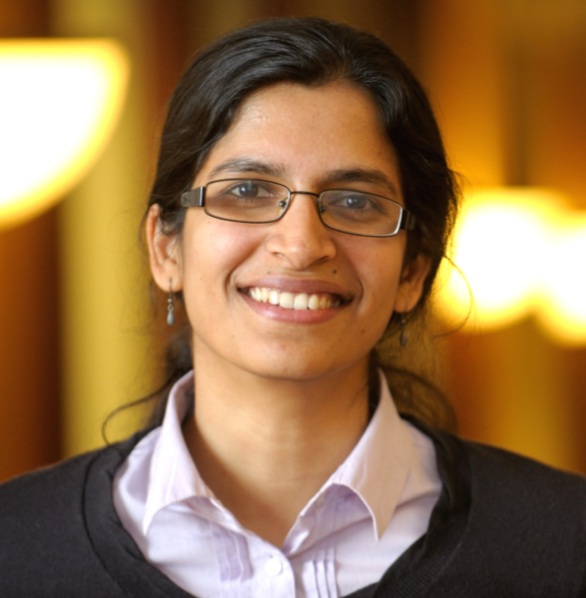
Associate Professor, Department of Computer Science and Engineering, IIT Bombay
Interview conducted by: Himanshu Dutta, M. Tech. Student, CFILT Lab, Dept. of CSE, IIT Bombay
This is a fascinating time for speech and NLP research. And I think the next frontier of AI is general intelligence. And since speech is so integral to human communication, I think there is no general intelligence that doesn't handle speech. So, multi-modality is the probable next step towards this, where you are not treating modalities in isolation; rather, you jointly model different modalities, and that's where the community is headed as well. So nowadays, you don't think of modalities in isolation. Earlier, it used to be these different silos where people would work on just speech, or just text, or just vision. Everyone now works jointly in all the modalities, and I think that's the way forward.
CFILT has been at the frontier of research in Indian language technologies for more than two decades. And this was long before NLP was a fashionable sub-area of ML, and this is primarily due to the foresight of its founder, Professor Pushpak Bhattacharyya. Another thing unique to CFILT is that students are encouraged to think about the linguistic underpinnings of various problems they solve and not just blindly apply models. And the success of CFILT is largely attributed to excellent students who have come in over the last years, and I have also been fortunate to work with some of them.
The landscape of NLP and speech in the Indian context has evolved positively over the years. There was a time when a very minimal number of benchmarks revolved around Indian languages. CFILT and other initiatives like AI4Bharat have all been instrumental in building resources for Indian languages. What is interesting and fun about Indian languages is that they are so diverse, and benchmarks always fall short because you are either not covering enough languages or not covering enough phenomena that are prevalent across languages. So there is always room for more. And we are steadily building more and more benchmarks, and we as a community should keep this momentum going.
It is extremely important to focus on your foundations and also get hands-on early. At the pace at which these fields are moving, it's very important to quickly get your hands dirty with coding, even if it's a small project, pick it up. There are lots of open-source communities that you can be part of, and they will help you bootstrap quickly. The other thing is, when you are picking research problems, pick research problems while being mindful of whether they can be potentially impactful. So, look at whether these are interesting research problems and whether they are challenging, but make sure that you are doing research with a purpose. Asking yourself, if “this” could be of some impact eventually, is a good way to go about it. And I think I am a good example of this. When I moved to India, I was on the lookout for problems that were relevant to the Indian setting and that were also interesting to think about. That guided my choice of working on speech recognition for accented speech and code-switched inputs, which are all interesting computational problems and relevant to the Indian context.

Current Position: Institute Chair Professor, CSE Department, IIT Bombay, Professor-in-Charge, Koita Centre for Digital Health
Prof. Ganesh reflects with pride on CFILT’s 25-year journey and its enduring contributions to Indian language technology and computational linguistics. He highlights how CFILT has consistently fostered innovation, pioneering research, and collaboration between linguists and technologists. The centre has played a key role in shaping the future of multilingual NLP in India and nurturing a vibrant research community.
He acknowledges the dedication and creativity of all students, researchers, and faculty who have been part of this legacy. This milestone, he notes, is not only a celebration of past achievements but also an inspiration to pursue new frontiers in language technology and societal impact. He looks forward to CFILT continuing to scale new heights with excellence, innovation, and meaningful contributions in the years ahead.
Professor, Department of Computer Science and Engineering, IIT Bombay
Interview conducted by: Narjis Asad, PhD Student, CFILT Lab, Dept. of CSE, IIT Bombay
So, the main common factor in these 25 years has been Professor Pushpak Bhattacharya. People come and go, but the guide and the faculty member remain. I think the main factor has been whatever it is that Professor Pushpak does. It is obvious that he is a great inspiration and that he can get a very vibrant lab culture going.
Apart from that, his full commitment to a subject that became glamorous only about ten years ago—but which he started working on when very few people bothered about this field—is extremely important. He had an unwavering commitment to it, regardless of where the world was going.
I will first talk about the opportunities. I think any researcher in India is uniquely positioned to solve problems that are very India-specific. We do not have to compete with American researchers who are inspired by their own challenges, often on a more global scale. India itself is such a huge part of the globe that, if we focus on problems here, we will find highly relevant problem statements all around us. We do not have to look anywhere else.
These opportunities—to solve real problems using AI and computing—present themselves every day, whether it is on our way from home to work or in any aspect of daily life.
In terms of computing education, again, I see tremendous opportunity. India is a huge country with a massive youth population that is absolutely thirsting for computing education. We are unique in that, regardless of background, people understand the value of education—especially computing education—as a passport to upward mobility. The audience is already there; we just have to reach them.
The technology is already available in terms of AI and distributed systems frameworks. We need to harness these tools to bring education to our youth at scale. I pretty much see only opportunity here.
Industry collaboration, however, is more of a challenge than an opportunity. The amount of investment capital available in India is still not at a scale where people are comfortable making risky bets. Cutting-edge academia–industry collaboration requires industry to fund high-risk, long-horizon research—research that may not bear fruit for 15 or 20 years.
At present, such investments often come from global companies dipping into their international treasuries. Indian companies need to grow their reserves to a point where they can also support this kind of ambitious research. We do have globally scaled companies, and I hope they begin to see the value in funding truly cutting-edge research.
That said, in computing education especially, we should not see AI as a threat. We should see it as an opportunity and fully embrace large-scale deployment using all the technology we have.
will first talk about the opportunities. I think any researcher in India is uniquely positioned to solve problems that are very India-specific. We do not have to compete with American researchers who are inspired by their own challenges, often on a more global scale. India itself is such a huge part of the globe that, if we focus on problems here, we will find highly relevant problem statements all around us. We do not have to look anywhere else.
These opportunities—to solve real problems using AI and computing—present themselves every day, whether it is on our way from home to work or in any aspect of daily life.
In terms of computing education, again, I see tremendous opportunity. India is a huge country with a massive youth population that is absolutely thirsting for computing education. We are unique in that, regardless of background, people understand the value of education—especially computing education—as a passport to upward mobility. The audience is already there; we just have to reach them.
The technology is already available in terms of AI and distributed systems frameworks. We need to harness these tools to bring education to our youth at scale. I pretty much see only opportunity here.
Industry collaboration, however, is more of a challenge than an opportunity. The amount of investment capital available in India is still not at a scale where people are comfortable making risky bets. Cutting-edge academia–industry collaboration requires industry to fund high-risk, long-horizon research—research that may not bear fruit for 15 or 20 years.
At present, such investments often come from global companies dipping into their international treasuries. Indian companies need to grow their reserves to a point where they can also support this kind of ambitious research. We do have globally scaled companies, and I hope they begin to see the value in funding truly cutting-edge research.
That said, in computing education especially, we should not see AI as a threat. We should see it as an opportunity and fully embrace large-scale deployment using all the technology we have.
My advice would be similar to my previous answer. Let us be inspired by the problems faced by our own society, our own people, and our government. We can even start with problems within our own institutes and organizations.
Let us not look westward for problem inspiration and then wait for others to write papers that we later adopt. Good problem statements are all around us, and we should solve them ourselves. That, I think, is the most important thing for young researchers.
For AI in particular, the scale of demand in India massively favors the use of AI to solve real problems. Do not look elsewhere—solve the problems here.
For systems research, we should own the fact that we have fewer resources. Given the difference between the dollar and the rupee, servers and infrastructure are expensive. Instead of seeing this as a limitation, we should turn it into an opportunity by creating technologies with smaller resource footprints.
There are already computing nations doing this. Why should we not lead in this area? We might accept some compromise in output quality in exchange for massive reductions in resource usage.
My colleague Professor Ganesh calls this the “ISRO model.” There is a famous factoid that ISRO sent a spacecraft to Mars on a budget comparable to what Hollywood spent making the movie Gravity. If India can do that in space science, we can do it everywhere else.
Having a small resource footprint is good for the country and good for the planet. Systems researchers in India should take ownership of this challenge.
Environmental concern is a deep passion of mine. Reducing carbon footprint is one of the most difficult challenges for computer science, AI, and systems researchers.
I am not an extremist who believes technological progress should stop because of environmental costs. Society will pursue technological progress anyway, so we might as well be the ones shaping it. However, we must be far more conscious about how resources are used.
As an old civilization, we must be wiser than nations that had the luxury of burning through resources. We should learn from their mistakes and find ways to balance technological progress with environmental responsibility.
One approach is to use resources only where they are truly required. I am not suggesting we scale back AI efforts—AI may be extremely important for India’s future. But I strongly resent wasteful luxury, such as fully air-conditioned malls, five-star hotels with excessively thick blankets, and rooms cooled to 18–20°C unnecessarily.
Such waste should be actively disincentivized—perhaps through taxation. We should promote open-air shopping complexes and sensible architectural designs. Even institutes should prioritize air conditioning primarily for data centers and GPU facilities, while using fans and natural cooling elsewhere where possible.
On an individual level, small actions—like using cloth bags—matter. It concerns me that many young people appear indifferent to environmentally friendly behavior. This is something we must consciously address.
In research too, the principle applies. If a task can be done with a small model on a small machine, there is no reason to use a massive model on a large GPU cluster. Using minimal resources can itself lead to fascinating research problems—designing efficient models, reducing compute, and optimizing energy use.
The key is focus. Once sustainability becomes a priority, we can innovate around it.
Professor, Department of Computer Science and Engineering, IIT Bombay
Interview conducted by: Md. Tausin Akhtar, PhD Student, CFILT Lab, Dept. of CSE, IIT Bombay
If we focus on safety-critical as the key term in relation to what I have worked on in formal methods, safety-critical systems are those that can cause damage—such as the recent airplane crash, where one possible reason could have been software failure. Similarly, self-driving cars could cause damage, or software systems could directly harm people.
Rapid prototyping in software engineering is generally not suitable for domains where there can be loss of life or property. In such systems, we obviously have to exercise much greater caution.
However, in other domains, going by the common proverb, “nothing ventured, nothing gained.” The philosophy of agile software engineering is not to keep designing systems until they are perfect, but to start prototyping—as you mentioned in AI—evaluate how good the system is and how easy it is to build, and then improve it incrementally as we go along.
These ideas are not conflicting. We have to look at the domain, analyze the risks, and then decide whether to slow down or move fast.
In addition to safety, another major concern in AI today is ethics. Ethical issues arise for two main reasons. First, there is often a profit motive, especially in domains like health and finance. If AI systems are generating information, we must ensure that there is no bias or hidden agenda.
Ethical values, however, typically come from regulators or third parties, not from the software developer alone. Therefore, we need proper checks and balances. This, in my opinion, is the key distinction between safety-critical software and rapid prototyping of AI applications.
I would actually not use the word open source alone, but rather open standards. Open source and open standards are closely interconnected.
There are two main reasons for my belief in this approach. Cost is one aspect—licensing costs matter—but the more important aspect is freedom: the freedom to modify, adapt, and interoperate. Open-source software typically conforms to interoperable standards, which allows us to build more complex systems much more easily, for example through API-based programming.
This enables the integration of many small components, much like the Unix philosophy. I have always believed that the correct way to develop large systems—contrary to the approach taken by some companies focused purely on profit—is not to lock in users, but to build open-standard-based applications, preferably open source, so that people can modify, extend, and use them in contexts beyond what was originally intended.
Students should understand this difference and ensure that the software they build has value beyond its initial design. Adhering to open standards and interoperability significantly increases long-term impact.
The second reason open source is important relates to trust. In our Trust Lab, we believe that software for which you do not have access to the source cannot truly be trusted. There could be hidden Trojans, time bombs, and other vulnerabilities. When you have access to the source code, the likelihood of such attacks is much lower, and they can be detected and handled more effectively.
You used a very nice word—curiosity. There is a saying that curiosity kills the cat, but that is meant lightly. Curiosity does not belong to a particular topic; rather, a curious or inquiring mind is able to ask questions across many dimensions.
Depending on one’s background, upbringing, exposure, and opportunities, a curious person explores different aspects of life. That has been my own path. When I was young, I listened to many Carnatic concerts, played chess tournaments, and mathematics was also one of my passions.
I am quite sure many students are similar—nobody is truly one-dimensional. Students would do well to ensure that they do not become one-dimensional. Intellectual growth and personal satisfaction are much richer when one makes time for multiple interests, rather than focusing exclusively on academics. That would be my advice to students.
As you know, India is a very diverse country. Diversity often adds strength, but it can also create fault lines—especially in the current political climate, where language sometimes plays a divisive role. In this context, CFILT is the kind of lab that can have a significant impact in bridging these gaps.
CFILT has led several important initiatives. It has formed a consortium of researchers from universities across the country, and I have personally observed with great pleasure their work in cross-lingual information access and research on resource-poor languages.
Not all Indian languages have sufficient digital resources. The research at IIT Bombay has helped translate resources available in one language and use them to create effective translations, making materials accessible across multiple languages. This is a highly praiseworthy effort.
In my opinion, one of the key contributions here is WordNet, which provides a common mapping framework and enables the development of applications across languages.
Of course, when it comes to real-world applications, as the saying goes, it is 99 percent inspiration—but translating that inspiration into profitable, large-scale applications with revenue streams requires significant additional effort. That challenge lies with students, who may choose to start companies, join industry, or carry these ideas forward to benefit society at large.
However, in terms of education and access to information, CFILT’s core contributions will continue to play a leading role. I wish them all great success.
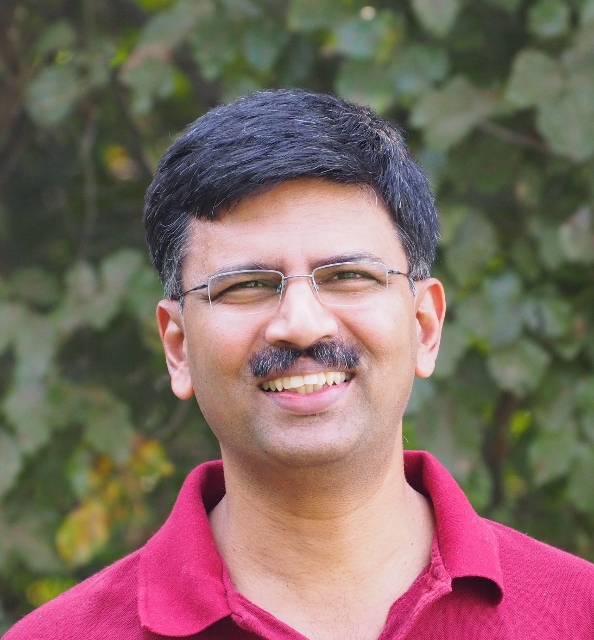
Professor, Department of Computer Science and Engineering, IIT Bombay
Interview conducted by: Kishan Maharaj, MS Student CFILT Lab, Dept. of CSE, IIT Bombay
The world changes both slower than you think and faster than you think. CFILT was set up, if I remember correctly, back in the 1990s—it's been 25 years now. The problem of Indian languages—translation, understanding, speech recognition, speech generation—has been under active research all these years. I remember Professor Pushpak when this lab, CFILT, was set up, and even before that, he was working on something called the Universal Networking Language (UNL), with support from the United Nations. It had nothing to do with networking in the usual sense, although the name made it sound that way. It was more of a grammar- and logic-based approach to language translation.
Among the major tasks that came out of that effort was WordNet. There was also work on grammatical structures and transformation rules to generate Indian language text from UNL, and on converting English or Indian languages into UNL. That was a very interesting effort, which I remember well.
Of course, technology moved ahead—UNL eventually went by the wayside. Then came statistical machine learning, which was further replaced by deep learning, and that has now become the basis for most language technologies. Professor Pushpak's group, of course, evolved very quickly with the times and has made major contributions. WordNet continues to be used and remains an important contribution, but there have been many more, like speech-to-speech translation.
NLP serves a very important need in a country like India, where we have 22 official languages, I think, and hundreds of dialects. Having documents in just one or two languages is not enough. We need the ability to translate naturally and accurately into many languages. Over the years, the level of accuracy has been steadily improving, and I think we’re now getting to a point where most of the work is done by machines, and humans just cross-check to ensure there are no mistakes.
Earlier, many public information sites were available only in English or in English plus Hindi. Now, many of these are moving towards supporting all Indian languages, more or less. This has been enabled, at least in part, by CFILT, which has contributed not only WordNet, but also trained a large number of people—Master’s and PhD students, and even some Bachelor’s students—who have worked in this area, entered the industry, and helped create tools that are now widely used.
Essentially, natural language processing has been the primary driver behind the recent wave of generative AI. Generative AI was largely made possible by the availability of massive amounts of text and the ability to predict the next word—or the next few words—based on preceding (or, in some cases, even succeeding) context.
So, in a way, today’s AI was built using natural language—not the spoken form, but the textual one. Now, of course, we have multimodal AI involving audio and video, covering both recognition and generation. Clearly, this new generation of AI is increasingly driven by these two modalities—speech and video.
That said, natural language processing will continue to be an important component. There’s a joke—which may or may not be true—that every time a certain company (let’s not name it) fired a linguist, the accuracy of their models went up. It’s just a joke, but it reflects the shift from traditional linguistics-based modeling to deep learning-based approaches. However, that doesn’t mean linguistic models are no longer important. I believe they still matter and will continue to have a role—even if, for now, they’ve been overshadowed by statistical and deep learning approaches.
So, I think natural language processing will remain a vital part of what drives AI and machine learning in the future.
In terms of sustaining itself and having a greater impact, one of the things we've come to realise in recent years of AI is that scale matters. Academic-level research is important—it enables the next generation of AI—but actually putting these ideas to use and creating systems that deliver real value requires operating at a very large scale. This has led many universities around the world, even the wealthiest like Stanford or MIT, to realise there are some things they simply cannot afford—only industry can. And the same holds true in India.
We hope that the next generation of AI techniques will reduce the costs to the point where smaller groups can once again have a direct impact by creating systems that are among the best in the world. But assuming that doesn’t happen in the short term, I think what’s important for labs like CFILT is twofold.
First, they need to create skilled manpower—people who will drive the future of AI in India. That’s the primary goal of any academic institution. Second, they should help foster an entrepreneurial mindset. Encourage people to go out and build companies, develop models, and push AI forward into the future.
The biggest change we need to see in research labs is the ability to train people to build real systems, start companies, or work in other companies with the goal of delivering impact. I see this happening in two main ways. One is through building foundational models, which are the most resource-intensive. The other, and perhaps even more important from the Indian perspective, is through building applications using these tools. That’s where the real value—and revenue—will come from.
So, research labs should not only train people but also work on practical, real-world problems that can lead to applications with impact. This will help generate value and push the nation forward.
Now, I do think CFILT has already done a good job in this space. They’ve consistently built tools that are actually used, like the Indian language translation systems, components of those systems, the Indian language WordNet, and so on. And they’ve trained people who’ve gone on to build companies or joined institutions like IIT Madras and contributed to startups there. So this isn’t new territory for CFILT—they’re already playing this role—but it’s important that they continue doing so.
Yeah, five to ten years is an eternity. They say prediction is hard—and predicting the future is even harder. I think everyone who has made predictions about AI in the last two decades—barring a very small number of people—has been proven completely wrong.
There were all these discussions around "AI-complete" problems, much like "NP-complete" in computer science, meaning that they were considered unsolvable. But it turned out that both sides of that debate were wrong. AI has shown that it can deliver, and people in the community who bridge theory and practice have built tools that actually solve problems that, on paper, were considered intractable. While there may still be some very hard instances, in most practical cases, we’ve found that they can be solved quite efficiently. So, two long-held assumptions about what’s hard in AI have been overturned in the past couple of decades.
So, predicting ten years into the future is extremely difficult. But one thing we can say for sure is that AI has made huge strides. In any field where there’s a sudden burst of progress, there’s a lot you can do—and that can add immense value to the world.
There’s also fear about job loss, and yes, some jobs will be lost. There’s a joke that the first jobs AI took were those of AI researchers who used earlier approaches, and the next might be AI researchers using deep learning, because AI could soon be better at what they’re doing. That may or may not happen, but it’s a real concern that comes with real social implications.
At the same time, it's something we can’t avoid. If you don't do it, someone else will—so it’s better to do it right and help the world rather than risk harming it. I think building applications that support human productivity and well-being will remain central.
If we look at earlier waves of technology, like the internet or computer science more broadly, there was always a fear that white-collar work would be eliminated. While some types of white-collar jobs disappeared, these technologies ended up creating far more new jobs that were better paid and more fulfilling. One hopes AI will follow a similar trajectory. With that in mind, I think AI research at IIT Bombay over the next five to ten years will continue to grow in both depth and impact. The application side of AI—using AI to solve real-world problems—is going to be incredibly important. We have already seen the influence of AI in this year’s Nobel Prizes. Every field of human knowledge is beginning to feel AI’s impact, and I believe we’re just at the beginning. Whether it's science, creativity, design, art, or traditional jobs—including programmers and even AI researchers—AI is going to influence everything. There’s a lot of research to be done in terms of building useful systems with existing technologies, and that’s where the majority of work will be focused. But it's equally important to have a core group of researchers who are thinking ahead, working on the next generation of technologies, not just applying what we already have.
I see both of these happening at IIT Bombay. We’re especially well-positioned because we have a large number of researchers in the core technologies within the computer science department, and across the institute, including in CMInDS—we have people working on AI applications across many domains. There’s a lot of promising work ahead, and I see a very bright future for AI research at IIT Bombay, across the board.